
 See Our Latest Article on HelloNation
What does a cracking joint actually mean?
For residents of Monroe, NY, joint cracking is a common question, especially after a long day of yardwork, winter shoveling, exercise, or sitting in one position. In most cases, a painless pop or crack is not a sign that bones are breaking or that a joint is being damaged.
The sound can come from several sources:
- A rapid change in pressure inside a fluid-filled joint
- Small gas cavities forming as joint surfaces separate
- Tendons or ligaments moving across nearby bone
- Rougher cartilage surfaces, particularly in an aging or irritated joint
- Movement of the spine or other joints during stretching or manual therapy
The sound itself is less informative than what accompanies it. A painless, occasional noise is usually less concerning than a new sound paired with swelling, weakness, locking, loss of motion, or persistent pain.
Why do knuckles crack?
Knuckle cracking is generally related to the behavior of synovial fluid, the lubricating fluid inside many joints. When the joint surfaces are pulled apart, pressure changes can create a cavity within the fluid. Research using real-time MRI found that the audible event is associated with rapid cavity formation rather than simply a bubble collapsing. ([pmc.ncbi.nlm.nih.gov](https://pmc.ncbi.nlm.nih.gov/articles/PMC4398549/?utm_source=openai))
After a joint cracks, it often cannot be cracked again immediately. The joint needs time for the fluid and gas concentrations to return to their prior state. This temporary “refractory period” is one reason the sound is different from the repeated clicking caused by a tendon or ligament moving during ordinary motion.
The popular belief that knuckle cracking causes arthritis has not been supported by the available evidence. Reviews and clinical studies have not found a meaningful association between habitual knuckle cracking and osteoarthritis in the finger joints. ([pubmed.ncbi.nlm.nih.gov](https://pubmed.ncbi.nlm.nih.gov/30080300/?utm_source=openai))
That does not mean every type of forceful joint manipulation is harmless. Repeatedly bending a finger beyond its normal range, forcing a painful joint, or continuing after an injury can irritate tissues even if arthritis is not the result.
Is cracking your back or neck the same as cracking your knuckles?
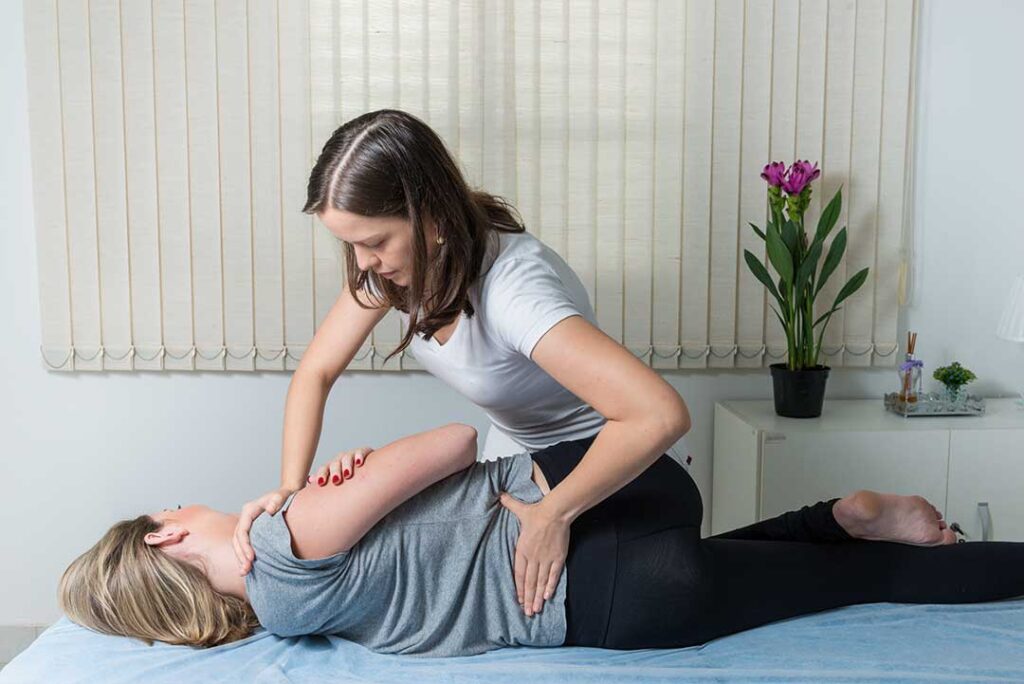
The basic sound-producing process may be similar when joint surfaces separate, but the spine contains many joints, discs, muscles, ligaments, and nerves. A crack in the back or neck may also result from a facet joint, a tendon, or soft tissue moving during rotation.
People sometimes feel looser after a joint makes a sound. That feeling may come from a brief change in joint motion, reduced muscle guarding, altered sensory input, or simply the relief of moving after being stiff. The noise is not proof that a joint was “out of place” and does not necessarily show that a correction was needed.
Spinal manipulation is one non-drug option included in clinical guidance for some types of low back pain, particularly when serious causes have been ruled out. Evidence-based guidance also lists approaches such as exercise, heat, massage, and other non-drug treatments, with no single option working best for every person. ([acponline.org](https://www.acponline.org/acp-newsroom/american-college-of-physicians-issues-guideline-for-treating-nonradicular-low-back-pain?utm_source=openai))
A useful distinction is that a treatment should be judged by changes in pain, movement, and function—not by whether an audible pop occurred.
When is a popping or grinding sound normal?
Joint noises are often harmless when they are:
- Painless
- Occasional or long-standing
- Not associated with swelling or warmth
- Not limiting normal movement
- Not accompanied by weakness, numbness, or instability
Knees can make crackling or grinding sounds during stairs, squats, or standing from a chair. This is sometimes called crepitus. If the sound occurs without pain or other symptoms, it does not automatically indicate arthritis or serious damage. Mayo Clinic guidance notes that isolated knee crepitus commonly needs no specific treatment, while pain, swelling, or catching changes the situation. ([newsnetwork.mayoclinic.org](https://newsnetwork.mayoclinic.org/discussion/by-itself-knee-crunching-sound-generally-not-cause-for-concern/?utm_source=openai))
Local routines can make harmless noises more noticeable. Cold weather may lead people to spend more time sitting indoors, while seasonal snow removal, gardening, cycling, or home maintenance can place sudden demands on joints that have not been moving regularly. Stiffness after inactivity does not necessarily mean injury, but gradually returning to activity is usually more comfortable than doing a demanding task all at once.
What signs suggest the sound should be evaluated?
Pain matters more than volume. A loud pop without pain may be insignificant, while a soft click with swelling or loss of function may deserve attention.
Medical evaluation is more appropriate when a joint sound occurs with:

- Sudden or persistent pain
- Swelling, redness, warmth, or fever
- A joint that locks, catches, or gives way
- Reduced range of motion
- Weakness, numbness, or tingling
- A visible change in shape
- An injury followed by a pop and difficulty using the limb
Urgent care is warranted after a significant injury if the joint looks deformed, cannot be used, becomes suddenly swollen, or causes severe pain. These signs can indicate a fracture, dislocation, ligament injury, or another condition that should not be managed by repeatedly trying to “pop” the joint. ([mayoclinic.org](https://www.mayoclinic.org/symptoms/joint-pain/basics/when-to-see-doctor/sym-20050668?p=1&reDate=25082024&utm_source=openai))
A joint that is hot, red, and swollen—especially with fever—also needs prompt medical attention because infection or an inflammatory condition can sometimes resemble an ordinary joint problem.
Can cracking a joint relieve stiffness?
Sometimes movement that happens to produce a crack also reduces stiffness temporarily. The relief may come from stretching, changing position, relaxing guarded muscles, or improving short-term movement. It does not necessarily mean the joint was damaged before the sound or repaired afterward.
For everyday stiffness, safer first steps often include gentle range-of-motion exercises, short walks, gradual strengthening, and taking breaks from prolonged sitting. After outdoor chores or snow removal, soreness may reflect muscle fatigue rather than a joint needing repeated manipulation.
Force should be limited. A person should not twist the neck, back, fingers, or other joints aggressively to create a sound, particularly after an injury or when pain radiates into an arm or leg.
What role does chiropractic care play?
Chiropractic care may include education, exercise guidance, soft-tissue techniques, and manual joint mobilization or manipulation. The audible sound is not the central goal, and treatment should not be defined by how often a joint cracks.
A careful approach considers the person’s symptoms, medical history, medications, bone health, recent injuries, and neurological signs. Certain situations—such as suspected fracture, infection, serious nerve involvement, or significant instability—require medical assessment rather than routine manipulation.
For a person with uncomplicated mechanical back pain, spinal manipulation may be one reasonable non-drug option, but it is not universally appropriate and should be part of a broader plan focused on function and recovery. The best measure of progress is improved daily activity, sleep, movement, or pain—not the number of pops heard during a session.
The practical takeaway
Most painless joint cracking is a normal sound created by pressure changes, soft-tissue movement, or ordinary joint mechanics. Habitual knuckle cracking has not been shown to cause arthritis. Concern rises when the sound is new, painful, associated with swelling or instability, or follows an injury.
For local households, the most useful approach is simple: keep joints moving, build activity gradually after periods of inactivity, avoid forcing painful motion, and pay attention to symptoms that affect function. A sound by itself is usually not a diagnosis; the surrounding pattern is what matters.
