
 See Our Latest Article on HelloNation
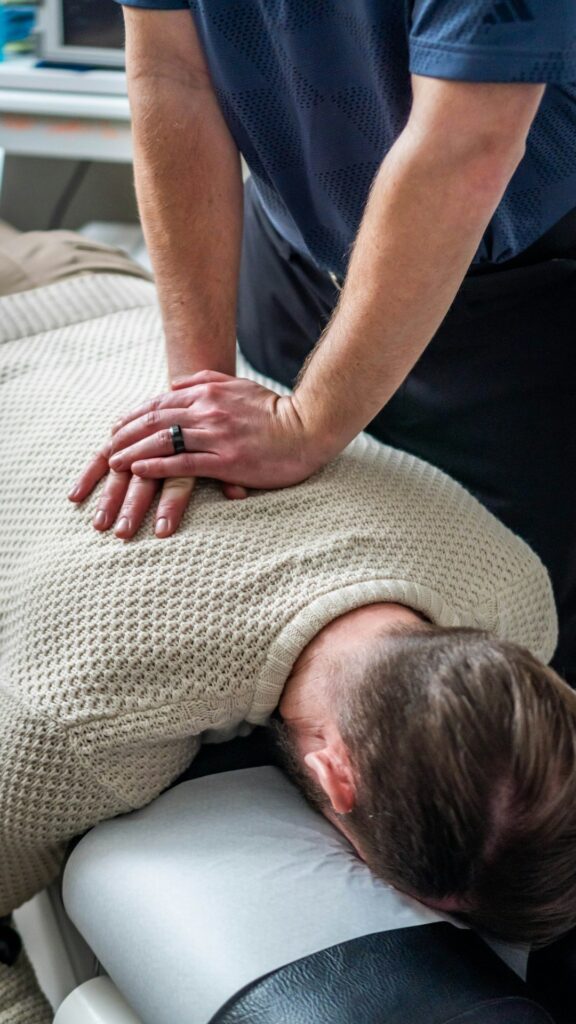
Back pain can make the first movement of the day feel surprisingly difficult. The safest approach is usually to avoid sitting straight up from the middle of the mattress. Instead, roll onto your side, move your legs over the edge, and use your arms to push your upper body upright.
This technique, often called a “log roll,” limits sudden twisting and bending through the lower back. It can be useful for residents in Monroe, NY dealing with morning stiffness, a recent strain, or pain that becomes worse when changing positions.
Why does getting out of bed hurt?
Morning back pain may be related to several factors, including prolonged time in one position, irritated joints or muscles, a disc problem, an unsupportive sleeping position, or pain that has developed from lifting, yard work, exercise, or household tasks.
The back can also feel stiff after several hours of limited movement. That does not necessarily mean the spine has been damaged overnight. However, severe, persistent, or worsening pain deserves medical attention, particularly if it interferes with walking, sleeping, work, or daily activities.
Cold weather may make stiffness feel more noticeable for some people. During Monroe winters, time spent indoors, reduced activity, shoveling, and sudden transitions between rest and physical work can all contribute to back discomfort. These factors do not explain every case, but they are common reasons symptoms may be more apparent in the morning or after a long period of sitting.
What is the safest way to get out of bed?
Move slowly and keep your shoulders, hips, and knees turning together as much as possible.
1. Pause before moving. Take a few calm breaths and notice whether the pain is mild stiffness or sharp, radiating, or disabling pain.
2. Bend your knees slightly. This can make rolling easier and reduce strain.
3. Roll onto your side. Try to keep your trunk aligned rather than twisting your shoulders separately from your hips.
4. Slide toward the edge of the bed. Move in small steps if necessary.
5. Lower both legs over the side. Let the weight of your legs help create a counterbalance.
6. Push up with your arms. Use your hands or forearm to raise your chest while your legs move toward the floor.
7. Sit briefly. Keep both feet supported and allow a moment for your balance to adjust.
8. Stand with your hips and knees. Push through your legs instead of bending sharply at the waist.
The movement should be controlled rather than hurried. If one side is more comfortable, roll toward that side, provided doing so does not increase leg pain, numbness, or weakness.
What should you avoid first thing in the morning?
Avoid a forceful sit-up from a flat position. That motion combines trunk flexion with abdominal effort and may aggravate an already sensitive back.
Also try to avoid:
- Twisting while reaching for a phone, nightstand, or blanket
- Bending forward to put on socks immediately after standing
- Jumping out of bed quickly
- Pulling hard on a nearby piece of furniture
- Carrying laundry, pets, or heavy objects before the back loosens
- Staying in bed for hours because movement feels uncomfortable
A short period of gentle movement is generally more helpful than prolonged bed rest. Walking around the room, changing position, and completing ordinary light activities may help reduce stiffness. Stop or modify an activity if symptoms become sharply worse or begin traveling farther down a leg.
What can help before standing?
Small changes can make the first few minutes easier.

If lying on the back, placing a pillow under the knees may reduce tension for some people. If sleeping on the side, a pillow between the knees can help keep the hips from rotating forward. The best position is the one that allows comfortable breathing and does not increase symptoms.
A warm shower or warm compress may ease muscle stiffness. Use comfortable warmth rather than high heat, and avoid falling asleep with a heating device in place. Gentle ankle movements, slow knee bending, or a few relaxed pelvic movements may help some people prepare to move, but exercises should not be forced during an acute flare.
Keep the path from the bed clear. Slippers or footwear with good traction may be useful, especially during icy or wet conditions. A bed that is extremely low or excessively soft can also make standing harder because it requires deeper bending at the hips and knees.
How should someone stand after sitting on the edge?
Do not stand immediately if the pain is intense or if there is lightheadedness. Sit with both feet flat, place them slightly behind the knees, and lean forward only as much as needed to bring the body over the feet. Then push through the legs and use the bed for light support.
Once upright, remain still for a moment. Check whether the legs feel steady. If pain causes buckling, significant weakness, or loss of balance, sit back down safely rather than trying to walk through it.
When is morning back pain a warning sign?
Back pain requires urgent evaluation when it occurs with new loss of bladder or bowel control, numbness around the groin or inner thighs, or significant weakness in one or both legs. These symptoms may indicate pressure on nerves that needs prompt attention.
Seek urgent medical care for severe back pain after a fall, collision, or other significant injury. Prompt evaluation is also appropriate when pain is accompanied by fever, unexplained weight loss, a history of cancer, or unusual pain that is constant and not affected by movement.
A person who cannot stand, walk, or safely manage basic activities should not attempt repeated movements alone. Assistance may be needed to prevent a fall.
When should recurring morning pain be evaluated?
Consider arranging a medical evaluation if the problem continues for several weeks, keeps returning, steadily worsens, or spreads into the buttock or leg. Numbness, tingling, or weakness also deserves attention, even when the pain itself is manageable.
A clinician may ask about sleeping position, work demands, lifting, exercise, prior injuries, medications, and the pattern of symptoms during the day. That information can help distinguish ordinary stiffness from a condition requiring further assessment.
The log-roll technique is a practical way to reduce strain, but it does not treat the underlying cause of back pain. The safest plan is to use slow, supported movement, remain gently active as tolerated, and seek timely care when symptoms are severe, unusual, or persistent.
